Last updated: April 2026 · AnomixLabs Tech Team
Django's 20 years of maturity, security architecture, and "batteries included" philosophy still offer an unparalleled developer experience in 2026. Some things never go out of style.
A Brief History of Django
Announced in 2005 by the development team at the Lawrence Journal-World newspaper, Django has since been used in production by organizations like Instagram, Disqus, Pinterest, Mozilla, NASA, and The Washington Post. As of 2026, it continues to be actively developed — the latest major release: Django 5.2 LTS (April 2025, support until April 2028).
1. Batteries Included: Everything Comes Ready
Django's most powerful aspect is what you don't have to write from scratch:
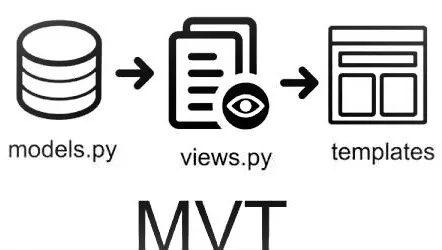
- ORM: Manage database queries as Python objects — PostgreSQL, MySQL, SQLite, Oracle
- Admin Panel: Register a model, and the admin is ready — no other tools needed for content management
- Auth System: Users, groups, permissions, password hashing — built-in, secure
- Form Validation: HTML forms + backend validation + CSRF protection, all together
- Migration System: Version control database schema changes
- Sitemap, RSS, Cache framework, Email, Signals
With Flask or FastAPI, you'd set these up yourself with separate libraries — each package choice is a risk and a maintenance burden. Django offers a consistent whole with a single decision.
2. New Features in Django 5.2 LTS
Django 5.2 LTS, released in April 2025, introduced notable innovations:
- Composite Primary Key: Support for primary keys composed of multiple fields — performance boost for many-to-many relationships
- LoginRequiredMiddleware: Makes all views require authentication by default — eliminates the need to add @login_required individually
- Facet Filters (Admin): Advanced filtering counts in admin listviews — shows how many results each filter yields beforehand
- Model.objects.aupdate_or_create() / aget_or_create(): Expansion of async ORM methods
- django.test.TestCase.captureOnCommitCallbacks: Easier testing of post-commit hooks
# Composite Primary Key example (Django 5.2)
from django.db import models
from django.db.models import CompositePrimaryKey

class OrderItem(models.Model):
    pk = CompositePrimaryKey('order', 'product')
    order = models.ForeignKey('Order', on_delete=models.CASCADE)
    product = models.ForeignKey('Product', on_delete=models.CASCADE)
    quantity = models.PositiveIntegerField()

# LoginRequiredMiddleware
MIDDLEWARE = [
    ...
    'django.contrib.auth.middleware.LoginRequiredMiddleware',
]
# To exempt a specific view from auth:
# Use the @login_not_required decorator
3. Security: A Proven Architecture
Django's security track record demonstrates its maturity compared to other frameworks:
- CSRF Protection: Automatic CSRF tokens are added to forms
- SQL Injection: ORM uses parameterized queries — parameter binding is mandatory even for raw SQL
- XSS: Template engine HTML-escapes by default
- Clickjacking: X-Frame-Options middleware included
- Password Hashing: Secure with bcrypt/Argon2 — plaintext storage is impossible
The Django Security Team quickly patches CVEs, and LTS support in major versions covers security patches. A large portion of the OWASP Top 10 is already addressed by Django's default configuration.
4. ORM: Power and Simplicity Combined
The Django ORM allows you to write readable Python code even for complex queries:
# Complex ORM query — 3 JOINs, filtering, annotation
from django.db.models import Count, Avg, Q

popular_articles = (
    InsightArticle.objects
    .filter(is_published=True)
    .filter(Q(tags__contains='Django') | Q(tags__contains='Python'))
    .annotate(faq_count=Count('faqs'))
    .select_related('author')           # Prevents N+1: JOIN
    .prefetch_related('tags')           # Prevents N+1: separate query
    .order_by('-insight_score')[:10]
)
The N+1 Problem and Django's Solution
The most common ORM pitfall: separate queries for each object (the N+1 problem):
# WRONG: N+1 problem
for article in InsightArticle.objects.all():  # 1 query
    print(article.author.name)  # 1 query per loop → 100 articles = 101 queries

# CORRECT: JOIN with select_related
for article in InsightArticle.objects.select_related('author').all():  # 1 query
    print(article.author.name)  # No extra queries

# prefetch_related for ManyToMany
articles = InsightArticle.objects.prefetch_related('faqs').all()  # 2 queries (fixed)
5. Admin Panel: Unrivaled Productivity Tool
The Django admin is a customizable content management interface that works once you register your models:
@admin.register(InsightArticle)
class InsightArticleAdmin(admin.ModelAdmin):
    list_display = ['title', 'is_published', 'insight_score', 'updated_at']
    list_filter = ['is_published', 'updated_at']  # Facet filters (with counts in 5.2)
    search_fields = ['title', 'content']
    list_editable = ['is_published']
    readonly_fields = ['created_at', 'updated_at']
    actions = ['publish_selected', 'unpublish_selected']
6. Django vs FastAPI: When to Use Which?
These two frameworks are not competitors but tools optimized for different scenarios:
- Choose Django: Content management, admin requirements, user authentication system, monolithic applications, rapid prototyping, projects with long maintenance periods
- Choose FastAPI: API-only (separate frontend), high-performance requirements, async-heavy workloads (WebSockets, streaming), microservices
- Django + FastAPI together: Main application Django, performance-critical API endpoints FastAPI — a sensible architecture for large-scale projects
7. Async Support
Since Django 4.1, there has been support for async views, async ORM, and async middleware:
from django.http import JsonResponse
import asyncio

async def async_insights(request):
    # Async ORM (Django 4.1+)
    articles = await InsightArticle.objects.filter(is_published=True).acount()
    return JsonResponse({'count': articles})

# WebSocket support with Django Channels
# Requires an ASGI server (Daphne, Uvicorn)
Note: Django async requires an ASGI server (Daphne, Uvicorn). Gunicorn is WSGI — async views will run, but they run synchronously. For true async, ASGI deployment is essential.
8. Community and Ecosystem
As of 2026, the Django ecosystem's size:
- 10,000+ Django packages on PyPI
- 300,000+ tagged questions on Stack Overflow
- 78,000+ stars on GitHub
- DjangoCon Europe and US continue annually
- Django REST Framework: top 1% in web framework downloads
Django's Disadvantages
For a balanced assessment:
- Monolithic structure — adapting it to a microservices architecture requires extra effort
- ORM async support is still evolving — not all methods have async versions
- Pure API throughput is lower compared to FastAPI and Node.js
- Integration with modern frontend frameworks like React/Vue requires manual effort with the template engine
- Learning curve — 'batteries included' also means 'a lot to learn'
Summary
Django continues to be a mature, secure, and productive choice for web development in 2026. 5.2 LTS adds features addressing real needs like composite PKs and LoginRequiredMiddleware. In an environment where alternatives like FastAPI and Node.js are strengthening, Django's combination of admin, auth, ORM, and security architecture remains unique. The right question isn't 'Django or not?' but 'Django for which project?'
Frequently Questions
What is the most important new feature in Django 5.2? expand_more
What is the state of Django async support? expand_more
Should I prefer DRF or Django Ninja? expand_more
Is a monolith or microservices better suited for Django? expand_more
Why does Django's security track record matter? expand_more
What types of projects is Django NOT ideal for? expand_more
How long does it take to learn Django? expand_more
Ali Kasımoğlu
Full-stack Developer & Founder of AnomixLabs
A software developer specializing in the Python and Django ecosystem. Focuses on modern web architectures, AI integrations, and minimalist user experiences. Under the AnomixLabs umbrella, he aims to transform complex problems into lean and effective digital solutions.