Last updated: April 2026 · AnomixLabs Tech Team
Choosing a programming language is not destiny, it's a tool selection. The right question isn't "which language is best," but "which language will get me to my goal fastest."
Stack Overflow Developer Survey 2024: What Does It Say?
Key data from Stack Overflow's 2024 survey of over 65,000 developers:
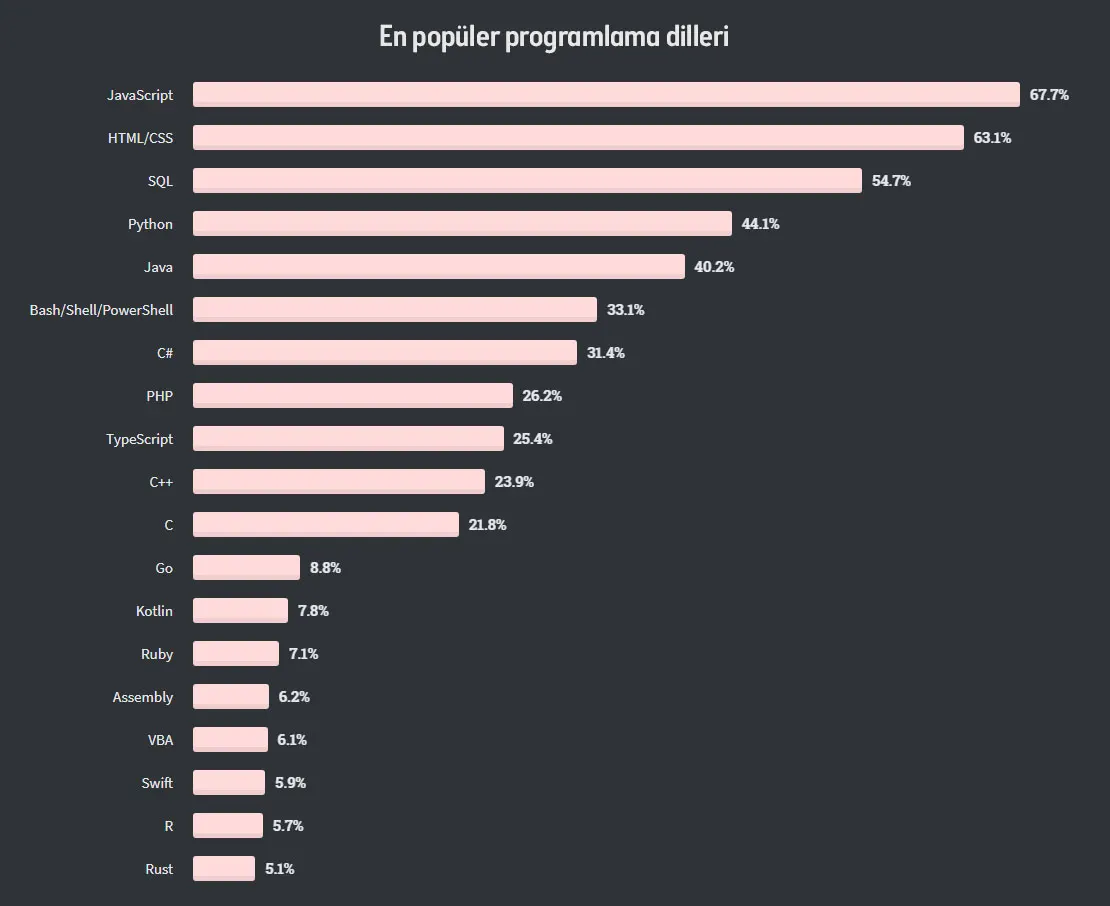
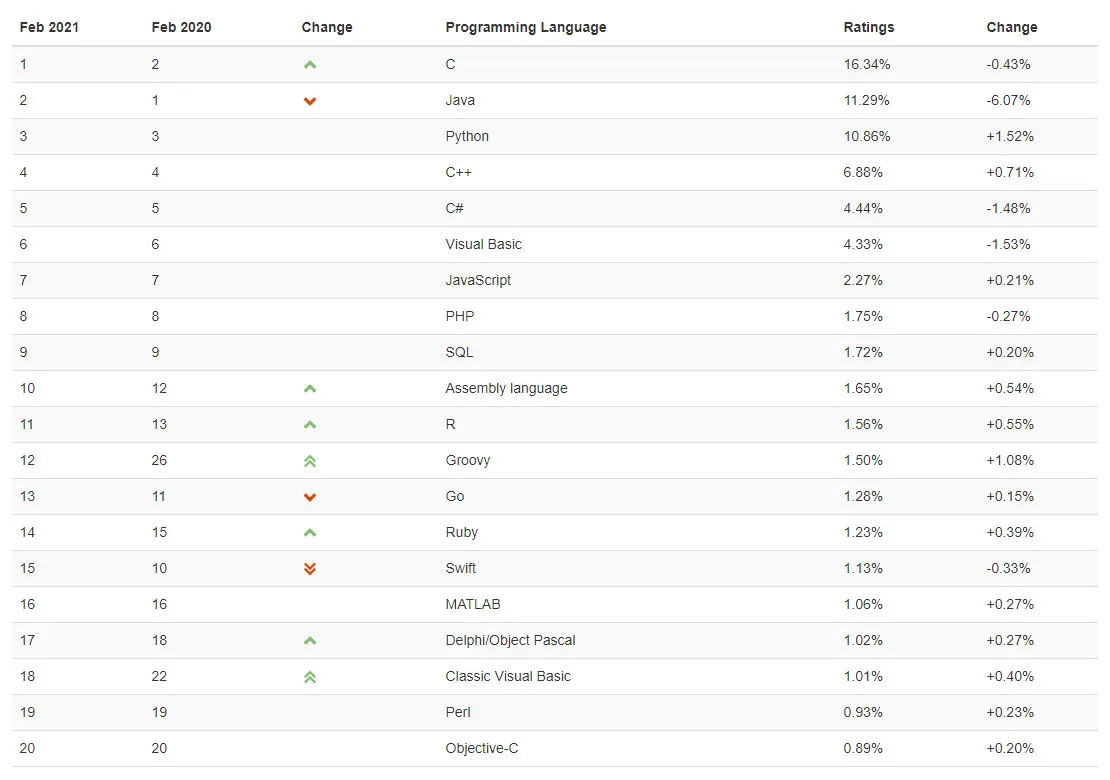
- Most Used Language (12th consecutive year): JavaScript — 62.3%
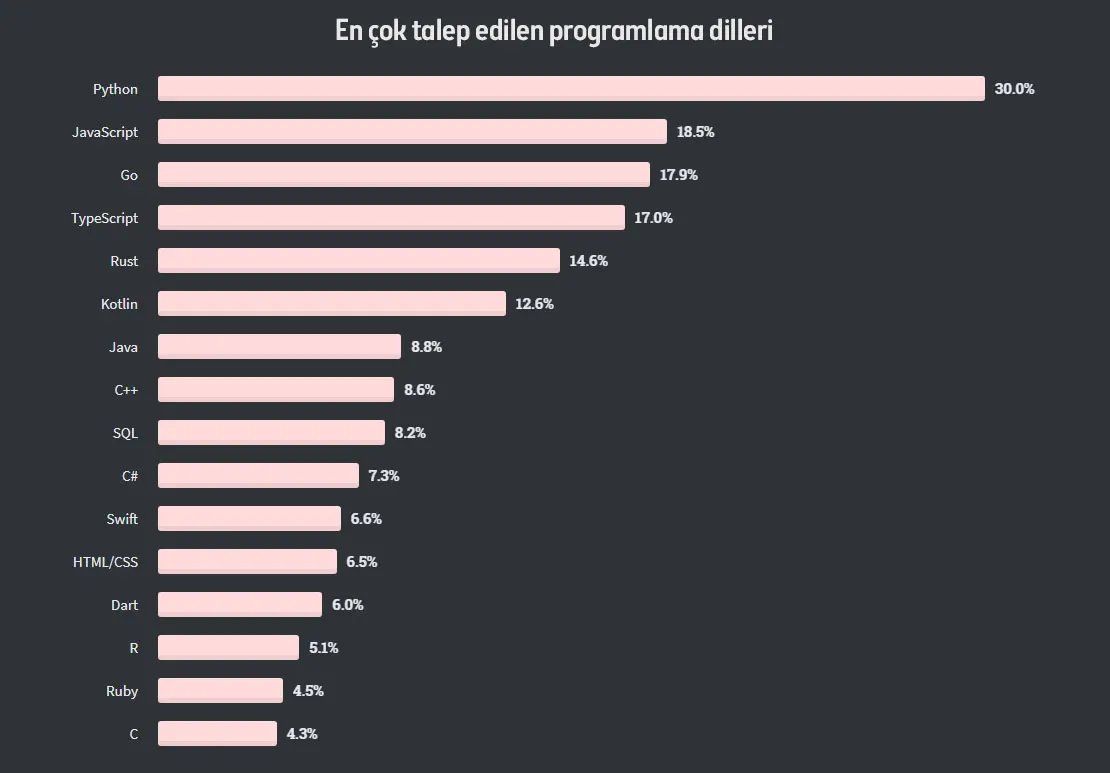
- Fastest Growing: Python — versatility from web to AI/ML
- Most Loved: Rust — 83% "would use again"
- Highest Paid (global): Erlang, Zig, Scala, Rust, Swift
- Most Sought After in Turkey: Python, JavaScript/TypeScript, Java, PHP
Python: The Versatile Entry Point
Python is still the recommended first language for beginners in 2026 — because:
- Readable syntax — close to human language
- Web (Django, FastAPI), data science (pandas, NumPy), AI/ML (PyTorch, TensorFlow), automation, scripting
- Large job market — over 500 Python positions on LinkedIn in Turkey each month
- Most comprehensive support with AI tools (Claude, Copilot)
Disadvantages: Limited in CPU-bound parallel tasks due to Global Interpreter Lock (GIL) (Python 3.13 started no-GIL support), not suitable for mobile, no frontend compared to JavaScript.
JavaScript / TypeScript: The Indispensable Web Language
If you're targeting frontend, JavaScript is mandatory — there's no alternative. TypeScript has become the standard for enterprise development as of 2024:
- React, Vue, Angular — all three major frontend frameworks use JavaScript
- Backend with Node.js
- TypeScript: type safety, ease of refactoring, quality IDE autocomplete
- Stack Overflow 2024: 71.7% of users love TypeScript
Python or JavaScript for beginners? For backend or data science → Python. For frontend or full-stack web → JavaScript + TypeScript. If you plan to learn both, starting with Python then moving to JavaScript is recommended.
Go (Golang): The Backend Performance Choice
Developed by Google, Go is a strong alternative to Python for backend development in 2026:
- High performance, low latency — 10-100x faster than Python
- Built-in concurrency (goroutines and channels)
- Simple deployment — single binary, container-friendly
- The language of Cloudflare, Docker, Kubernetes, Uber, Dropbox
- Salary advantage — 20-30% above global average
When to learn Go? If you know Python or Java and want to develop high-traffic APIs or microservices. Not recommended as a first language — a Python foundation first.
Rust: The System Language of the Future
Created by Mozilla, Rust combines C/C++ performance with memory safety:
- Most loved language on Stack Overflow for 9 consecutive years
- Included in the Linux kernel (2022)
- WebAssembly, systems programming, embedded systems
- Very steep learning curve — the borrow checker can be challenging for beginners
Who should learn it? Experienced developers with a C/C++ background looking to move into systems programming. Definitely not recommended as a first language.
Turkey Job Market Analysis (2025-2026)
Turkey-specific observations compiled from LinkedIn and Kariyer.net data:
- Python/Django: Strong demand in Fintech, e-commerce, and the startup ecosystem
- JavaScript/React: Companies of all sizes, the largest pool of positions
- Java/Spring: Large enterprise companies, banking, insurance
- PHP/Laravel: SMEs, e-commerce — still in demand, but new position growth is slow
- Go/Rust: Increasing in tech companies and for international remote positions
AI/ML positions in Turkey have increased by 180% between 2024-2026 — the Python + PyTorch/TensorFlow combination is the most sought-after profile.
Language Choice for AI/ML
For those looking to enter artificial intelligence and machine learning:
- Python: Essential — PyTorch, TensorFlow, scikit-learn, Hugging Face all use it
- SQL: Fundamental for data manipulation — as critical as Python
- R: Can be preferred for academic statistics and biostatistics
- C++/CUDA: Advanced for model optimization and GPU programming
Python's dominance in AI engineering is undisputed. In the LLM era (2023+), working in AI without knowing Python is nearly impossible.
6 + 6 Month Career Roadmap
First 6 Months — Fundamentals:
  Months 1-2: Python syntax, OOP, data types, file handling
  Months 3-4: Django basics — Model, View, Template, Forms
  Months 5-6: PostgreSQL, REST API (DRF), Git, Docker basics
  Goal: First deployed project (Railway or VPS)

Second 6 Months — Career:
  Months 7-8: Writing tests, CI/CD, Linux server management
  Months 9-10: Specialization (AI/ML, microservices, frontend)
  Months 11-12: Portfolio development, job applications, networking
  Goal: First junior position or freelance project
Is Math Necessary?
For web development and application programming, no — basic high school math is sufficient. For data science, statistics and linear algebra are useful. For AI/ML research, calculus and linear algebra are necessary. General rule: don't be afraid of math for web/app development; you'll learn as much as you need as you progress.
The Age Factor
There is no age limit to start programming. The AnomixLabs team includes developers who started their careers after 35 and have been successful. Motivation and consistent practice are more decisive than age. The software industry values experience — even work experience in another field can provide an advantage in problem-solving and client communication.
Summary
Recommended order for 2026: Backend/web → Python + Django. Frontend/fullstack → JavaScript + TypeScript + React. Enterprise Java → Java + Spring. Performance/systems → Go or Rust (for experienced). AI/ML → Python is essential. For beginners, Python is the safest choice — large job market, readable syntax, extensive ecosystem.
Frequently Questions
Python or C++ as a first language? expand_more
University, bootcamp, or self-learning? expand_more
Can you become a programmer without a math background? expand_more
Is there an age that is too late to start? expand_more
Which language will earn me the most money? expand_more
Go or Python for backend? expand_more
Should I learn a second language before mastering the first? expand_more
Ali Kasımoğlu
Full-stack Developer & Founder of AnomixLabs
A software developer specializing in the Python and Django ecosystem. Focuses on modern web architectures, AI integrations, and minimalist user experiences. Under the AnomixLabs umbrella, he aims to transform complex problems into lean and effective digital solutions.