Last updated: April 2026 · AnomixLabs Technical Team
SEO is not about tricking search engines, but about providing real value to the user and giving signals that Google can measure. In 2026, the line between the two has blurred even further.
What is SEO?
SEO (Search Engine Optimization) is the sum of technical and content efforts made to ensure websites appear in the top rankings on search engine results pages (SERPs). You demonstrate to Google, Bing, and other engines that your site is the best result for specific queries.
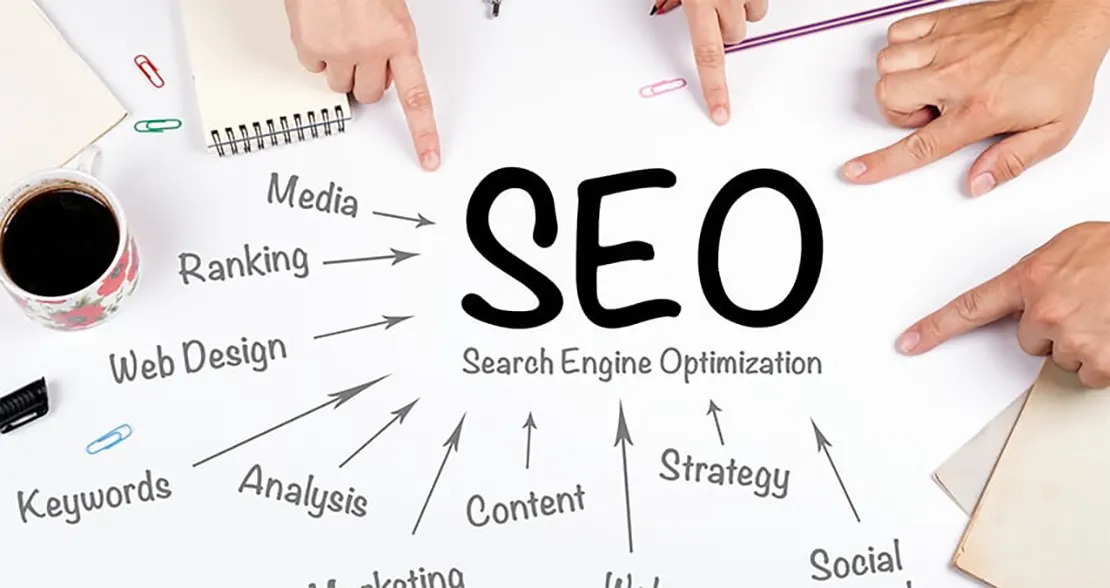
As of 2026, SEO consists of three main components: Technical SEO (speed, crawlability, structured data), Content SEO (E-E-A-T, keyword strategy, user intent), and Authority SEO (backlink profile, brand signals).
Google E-E-A-T: The Most Critical Factor in 2026
E-E-A-T, defined in Google's Search Quality Rater Guidelines, is the framework used to evaluate content quality:
- Experience: Signals that the content creator has firsthand experience with the topic. First-hand experience like 'What we applied in AnomixLabs projects...'.
- Expertise: The author's deep technical knowledge in their field. Verifiable technical details, reference sources.
- Authoritativeness: Citations from recognized sources in the industry, social proof, backlink profile.
- Trustworthiness: Accurate information, source attribution, secure site (HTTPS), clear authorship information.
For YMYL (Your Money or Your Life) pages — finance, health, law — E-E-A-T standards are much higher. Google evaluates these pages more rigorously because misinformation can cause serious harm.
Core Web Vitals 2026: The INP Era
In March 2024, Google replaced the FID (First Input Delay) metric with INP (Interaction to Next Paint). This change represents a more comprehensive way to measure page interactivity:

- LCP (Largest Contentful Paint): Target <2.5s — Loading of the largest content element
- INP (Interaction to Next Paint): Target <200ms — Response time to any user interaction (replaces FID)
- CLS (Cumulative Layout Shift): Target <0.1 — Shift of visible content
While FID only measures the first click, INP measures interactions throughout the entire page lifecycle. It is more difficult to lower the INP score for JavaScript-heavy sites.
AI Overviews (SGE) and Organic Clicks
Google's AI Overviews feature (formerly SGE — Search Generative Experience) displays AI-generated summary boxes above search results for some queries. According to 2025-2026 data:
- Organic clicks may decrease by 18-64% in queries with AI Overviews (Search Engine Land, 2024)
- Most affected categories: recipes, simple definitions, quick answer queries
- Least affected: complex, nuanced, timely, and local queries
- Being cited as a source in an AI Overview is a new visibility opportunity
Optimization for AI Overviews: short, clear, direct-answering paragraphs; FAQ schema markup; citation of authoritative sources; up-to-date data.
Technical SEO Implementation in Django
Basic implementation for SEO in Django projects:
# settings.py — django-meta or manual meta
# Our recommendation: django-seo2 or adding meta tags to the base template

# In base.html

    <!DOCTYPE html>
    <html lang="tr">
    <head>
    <meta charset="utf-8"/>
    <meta content="width=device-width, initial-scale=1.0" name="viewport"/>

    <title>Meta Title Field</title>
    <meta name="description" content="Meta Description Field">
    <meta name="robots" content="index, follow">

    <link rel="canonical" href="yourdomain.com" />
    <link rel="alternate" hreflang="tr" href="pageaddress.com/" />
    <link rel="alternate" hreflang="x-default" href="pageaddress.com/" />

    <meta property="og:title" content="Meta Title Field">
    <meta property="og:description" content="Meta Description Field">
    <meta property="og:type" content="website">
    <meta property="og:url" content="yourdomain.com">
    <meta property="og:image" content="/img/pageimage.webp">
    <meta property="og:image:width" content="1200">
    <meta property="og:image:height" content="630">
    <meta property="og:locale" content="tr_TR">
    <meta property="og:locale:alternate" content="en_US">
    <meta property="og:site_name" content="SiteName">
    <meta name="twitter:card" content="summary_large_image">
    <meta name="twitter:image" content="/img/pageimage.webp">
    <meta name="twitter:site" content="@twitterhandle">
Django Sitemap Framework
Django's built-in sitemap framework is mandatory for Google Search Console:
# urls.py
from django.contrib.sitemaps.views import sitemap
from .sitemaps import InsightSitemap, StaticViewSitemap

sitemaps = {
    'insights': InsightSitemap,
    'static': StaticViewSitemap,
}

urlpatterns = [
    path('sitemap.xml', sitemap, {'sitemaps': sitemaps}),
]

# sitemaps.py
class InsightSitemap(Sitemap):
    changefreq = 'monthly'
    priority = 0.8

    def items(self):
        return InsightArticle.objects.filter(is_published=True)

    def lastmod(self, obj):
        return obj.updated_at
JSON-LD Schema Markup: FAQPage and HowTo
Structured data helps Google understand your content and can earn you rich results:
{
  "@context": "https://schema.org",
  "@type": "FAQPage",
  "mainEntity": [
    {
      "@type": "Question",
      "name": "What is Django?",
      "acceptedAnswer": {
        "@type": "Answer",
        "text": "Django is a high-level web framework written in Python."
      }
    }
  ]
}
The FAQPage schema gives a chance to be displayed in a question-answer format in Google search results. HowTo schema is used for step-by-step content.
hreflang: Multilingual Site SEO
The hreflang tag is mandatory for sites offering content in Turkish and English:
    <link rel="alternate" hreflang="tr" href="pageaddress.com/" />
    <link rel="alternate" hreflang="en" href="pageaddress.com/en/" />
    <link rel="alternate" hreflang="x-default" href="pageaddress.com/" />
For projects using Django-parler, a template tag can be written to automatically generate hreflang in each page's header. Incorrect hreflang will cause Google to misunderstand language targeting.
robots.txt and Crawl Budget
In large Django projects, hiding admin, API, and test URLs from Google is critical:
User-agent: *
Disallow: /admin/
Disallow: /api/
Disallow: /accounts/
Allow: /

Sitemap: https://site.com/sitemap.xml
Page Speed and SEO Relationship
Google has been using Core Web Vitals as a ranking factor since 2021. Speed optimization in Django projects:
- Static files: Caching with WhiteNoise or CDN
- Database: select_related() / prefetch_related() for the N+1 query problem
- Cache framework: Page or fragment caching with Django cache + Redis
- Image optimization: WebP format, lazy loading, responsive images with srcset
- Minification: CSS/JS concatenation with django-compressor
Keyword Strategy 2026
In 2026, keyword research should focus on search intent, not just volume:
- Informational: 'What is Django' — Guide, tutorial, definition content
- Navigational: 'Django official docs' — Brand or resource searches
- Commercial: 'best Django courses' — Comparison, review content
- Transactional: 'Django developer cost' — Purchase, contact pages
Long-tail keywords (3+ words) offer lower competition and higher conversion rates. Targeting 'how to build a REST API with Django' is much more realistic than targeting 'Django'.
Content SEO: Title and Meta Description Optimization
- Title tag: ≤70 characters, prioritize primary keyword
- Meta description: ≤155 characters, CTR-focused, include a call to action
- H1: One per page, should overlap with the title tag but not be identical
- H2-H6: Content hierarchy, long-tail keywords
- URL structure: Short, descriptive, use hyphens (-), not underscores (_)
Backlink Profile and Authority
Domain Authority (DA) — Moz metric — and Domain Rating (DR) — Ahrefs metric — indicate your site's overall authority level. For quality backlinks:
- Produce original research and data — others will reference it
- Write guest posts for industry blogs
- Broken link building
- Create brand signals through social sharing
Using Google Search Console
Google Search Console (GSC) is an essential tool for measuring SEO efforts. In Django projects:
- Add and verify your site in GSC (HTML meta tag recommended)
- Submit sitemap.xml
- Regularly check the Core Web Vitals report
- Monitor crawl errors and 404 pages
- Track which queries are driving clicks and average position
Summary: 2026 SEO Checklist
- E-E-A-T signals: author information, firsthand experience, source attribution
- Core Web Vitals: LCP <2.5s, INP <200ms, CLS <0.1
- Technical: HTTPS, sitemap, robots.txt, canonical, hreflang
- Schema: FAQPage, Article, BreadcrumbList JSON-LD
- Content: aligned with search intent, original, supported by up-to-date data
- Mobile: responsive design, mobile speed, viewport meta
Frequently Questions
What is INP and how does it differ from FID? expand_more
Will AI Overviews reduce my organic traffic? expand_more
How does FAQPage schema affect organic visibility? expand_more
Can AI-generated content rank on Google? expand_more
Why is the canonical URL important in a Django project? expand_more
Why do Core Web Vitals matter for a low-traffic site? expand_more
What happens if hreflang is misconfigured? expand_more
Ali Kasımoğlu
Full-stack Developer & Founder of AnomixLabs
A software developer specializing in the Python and Django ecosystem. Focuses on modern web architectures, AI integrations, and minimalist user experiences. Under the AnomixLabs umbrella, he aims to transform complex problems into lean and effective digital solutions.